
 Puppy
 Dog
 Senior
 Beef
 Chicken
 Duck
 Fish
 Lamb
 Tripe
 Turkey
 Kitten
 Cat

Can Dogs Eat Cauliflower?
Cauliflower has become a regular feature in a lot of kitchens lately, from cauliflower rice to cauliflower mash, and it's natural to wonder whether your dog can share in it. So, can dogs eat cauliflower?
The short answer is yes, dogs can eat cauliflower in moderation. It's low in calories, easy on the waistline, and safe for most healthy dogs when served plain.
As with most vegetables though, preparation and portion size make all the difference. Here's everything you need to know before offering your dog some.
Is Cauliflower Good for Dogs?
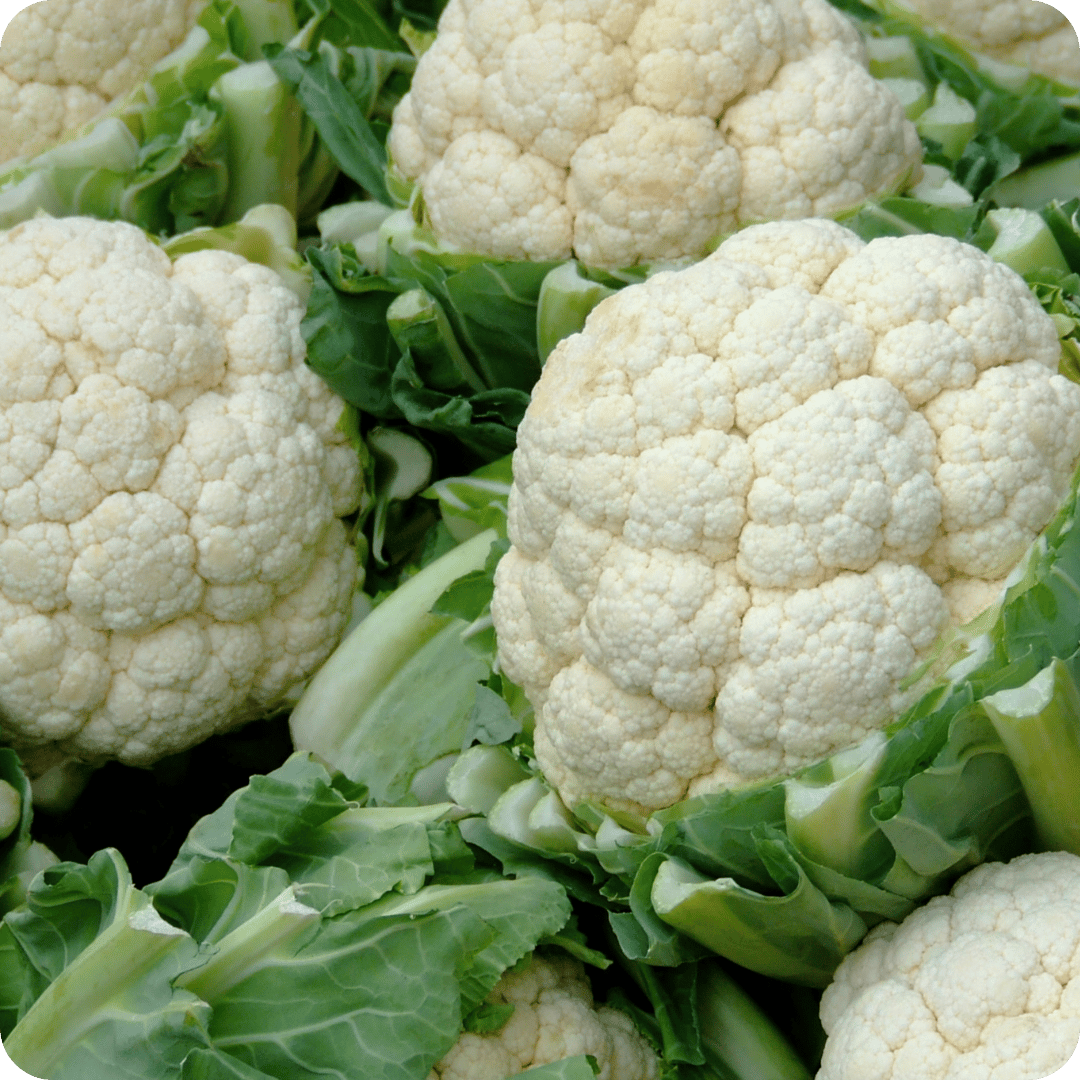
Yes, cauliflower can be a healthy, low-calorie addition to your dog's diet in small amounts. It contains:
- Fibre to support healthy digestion
- Vitamin C and vitamin K
- Antioxidants
- Folate
- Very few calories per serving
This makes cauliflower a reasonable option for dogs that are overweight or need a lower-calorie treat, since it's filling without adding much to a daily calorie count.
That said, cauliflower shouldn't take the place of proper nutrition. Dogs are built to thrive on high-quality animal protein, with vegetables like cauliflower serving as an occasional extra rather than a core part of the diet.
If you feed a raw diet, a few small florets now and then sit comfortably alongside fresh meat, organs and bone.
Can Dogs Eat Raw Cauliflower?
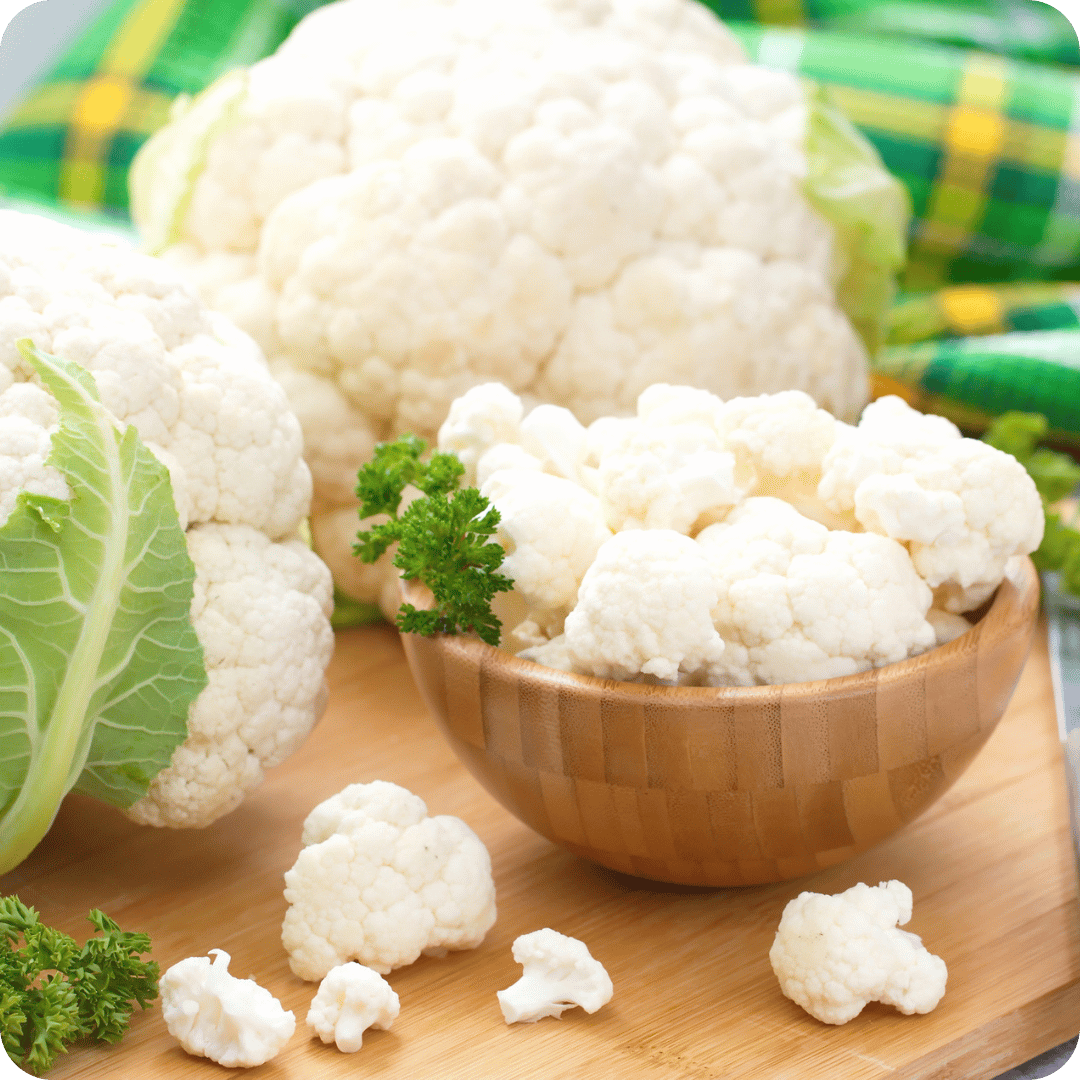
Yes, most dogs can eat raw cauliflower.
Raw florets have a satisfying crunch that many dogs enjoy, and they retain more of their natural nutrients than cooked cauliflower. Cut pieces down to a manageable size before feeding, particularly for smaller dogs, since large florets can be harder to chew properly.
Introduce raw cauliflower gradually if your dog hasn't had it before. Some dogs find raw vegetables tougher to digest than cooked ones.
Can Dogs Eat Cooked Cauliflower?
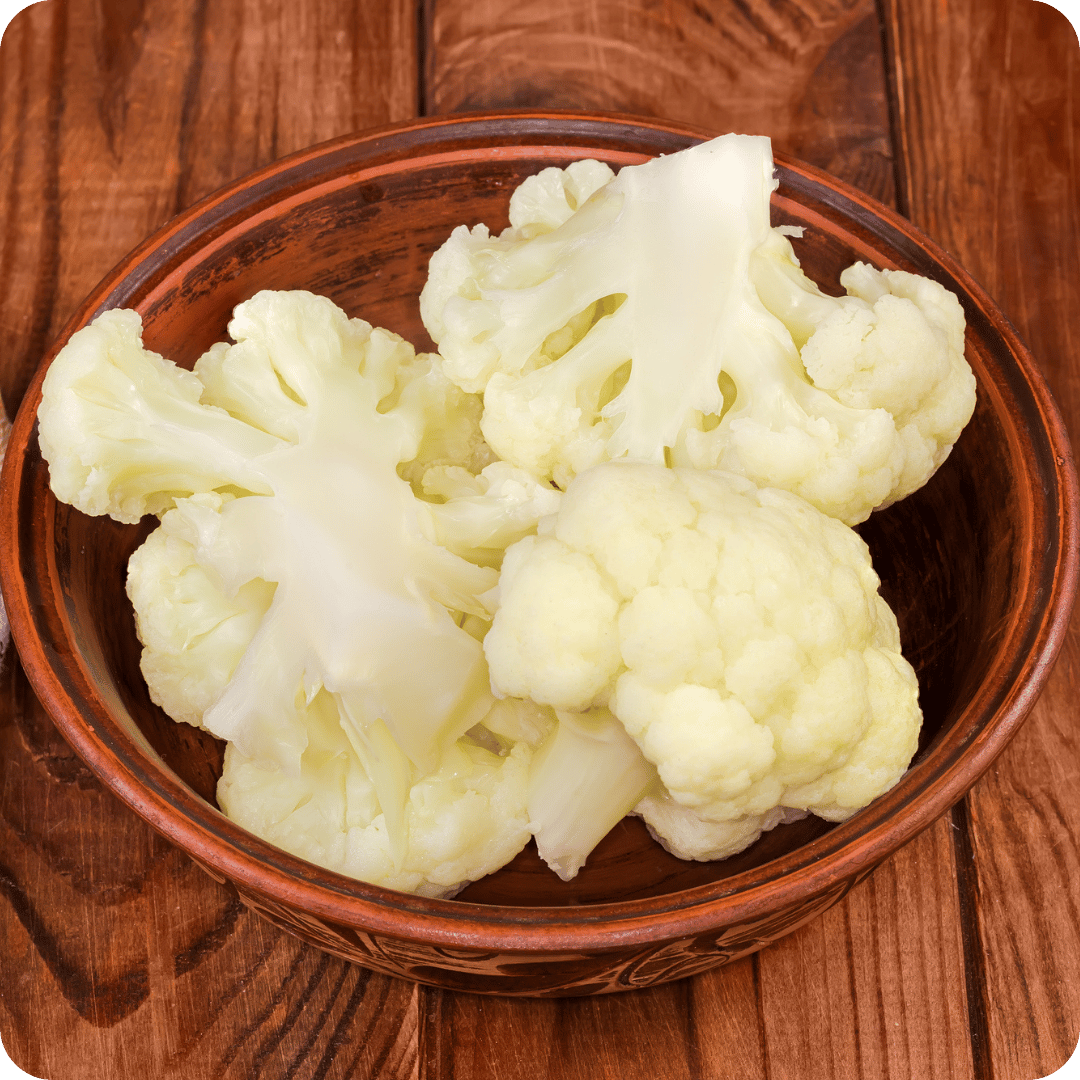
Yes, cooked cauliflower is safe for dogs and can be gentler on the stomach than raw.
Steaming or boiling softens the fibres, making it easier to digest, particularly for dogs with a sensitive tummy. Always serve it plain, without butter, oil, salt, cheese, or seasoning.
Avoid dishes like cauliflower cheese, curried cauliflower, or roasted cauliflower with garlic and spices. These preparations are common in
human kitchens but unsuitable for dogs, largely because of the added salt, fat, and seasonings rather than the cauliflower itself.
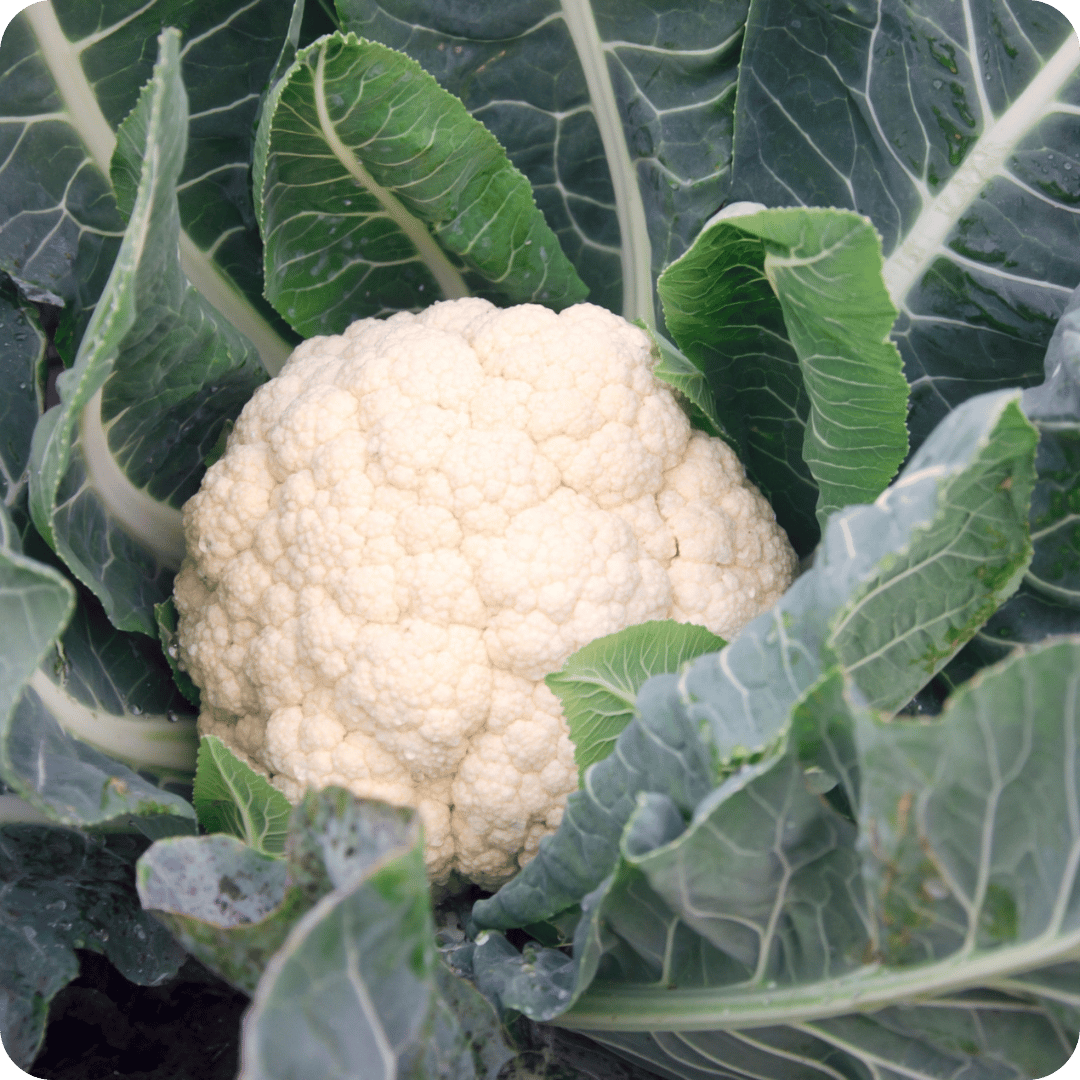
Can Dogs Eat Cauliflower Leaves and Stalk?
Yes, the leaves and stalk are safe for dogs in small amounts.
They're often thrown away when preparing cauliflower for humans, but there's no reason not to offer them to your dog occasionally. The stalk is fairly fibrous and tougher than the florets, so chop it into small pieces to make it easier to chew and digest.
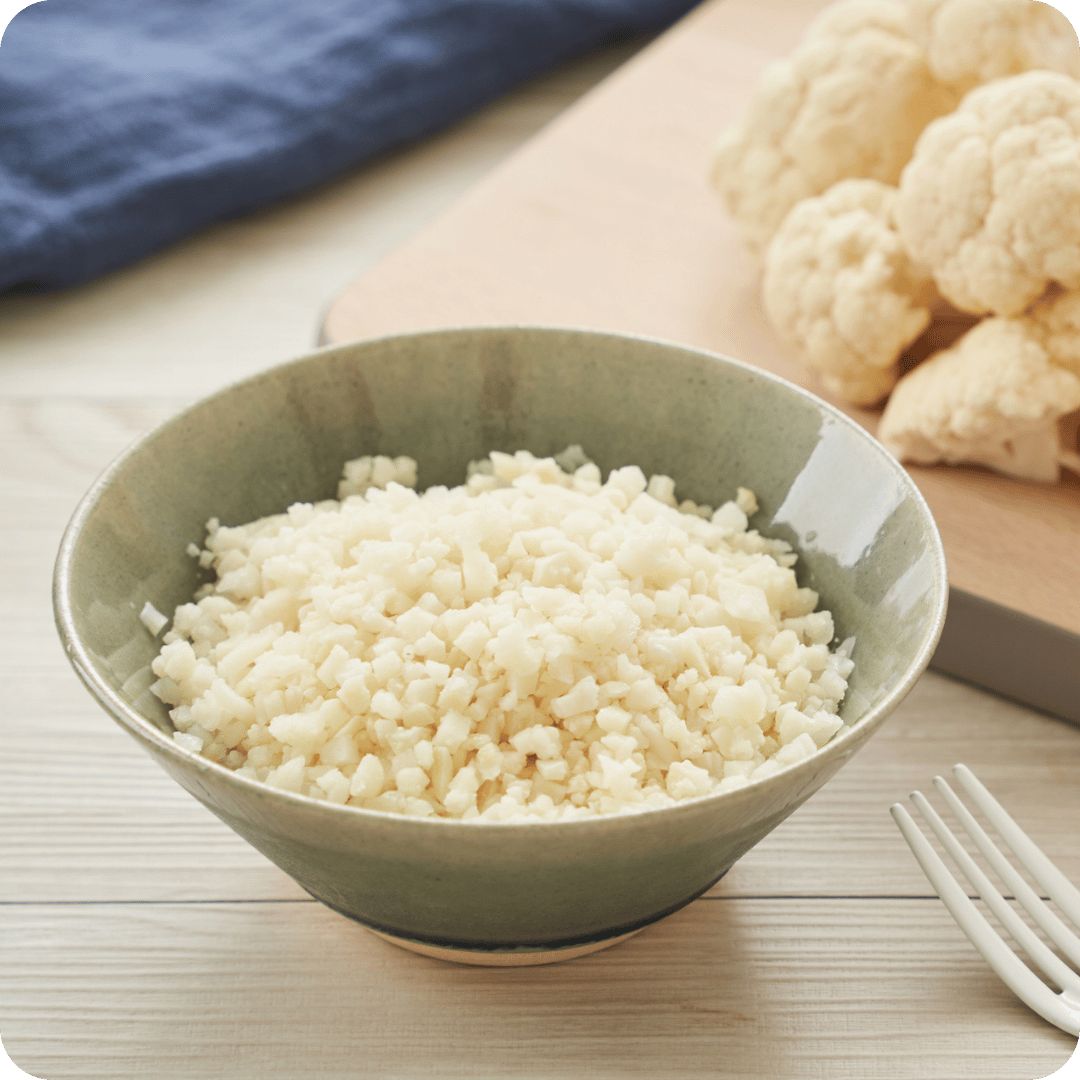
Can Dogs Eat Cauliflower Rice?
Plain cauliflower rice is safe for dogs, but it's worth checking what's in it first.
Cauliflower rice on its own, with nothing added, is simply finely chopped cauliflower and poses no more risk than the whole vegetable. The issue is that shop-bought or pre-seasoned versions often contain garlic, onion, salt, or flavourings, all of which should be kept well away from dogs.
If you're making your own, plain and unseasoned is always the safer choice.
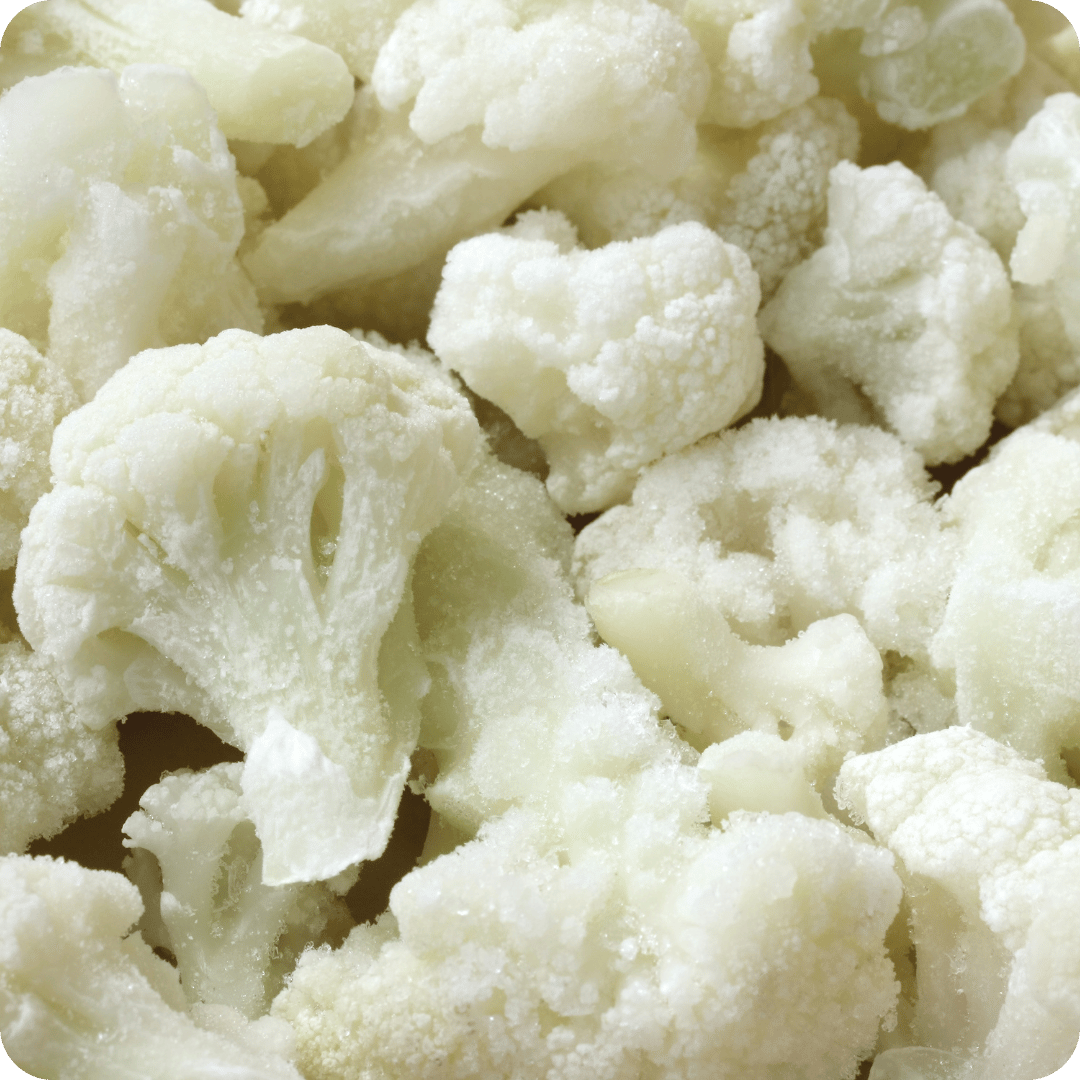
Can Dogs Eat Frozen Cauliflower?
Yes, dogs can eat frozen cauliflower as long as it's plain.
Frozen florets can make a cool, crunchy treat, particularly in warm weather. Check the packaging carefully first, since some frozen vegetable mixes include onion, garlic, or seasoning blends that aren't safe for dogs.
Are There Any Risks of Feeding Cauliflower to Dogs?
Cauliflower is safe in moderation, but there are a few things worth knowing.
Gas and Bloating
Cauliflower is a cruciferous vegetable, part of the same family as broccoli and cabbage, and these vegetables are well known for producing gas. Feeding too much at once can leave your dog uncomfortable, so it's best introduced gradually and kept to modest portions.
Digestive Upset
Overdoing it on cauliflower, in any form, can lead to:
- Loose stools
- Diarrhoea
- Stomach discomfort
Starting small and watching how your dog responds is the safest way to introduce it for the first time.
Choking Risk
Large, hard florets can be difficult for some dogs to chew properly, particularly small breeds or dogs that don't chew their food thoroughly. Cutting cauliflower into smaller, appropriately sized pieces reduces this risk.
Seasoned or Prepared Cauliflower Dishes
Cauliflower is often served with cheese sauce, curry spices, garlic, or butter in human meals. These additions, rather than the cauliflower itself, are what make certain dishes unsuitable for dogs. Garlic and onion in particular are toxic to dogs, even in small quantities, so always check for hidden ingredients before sharing.
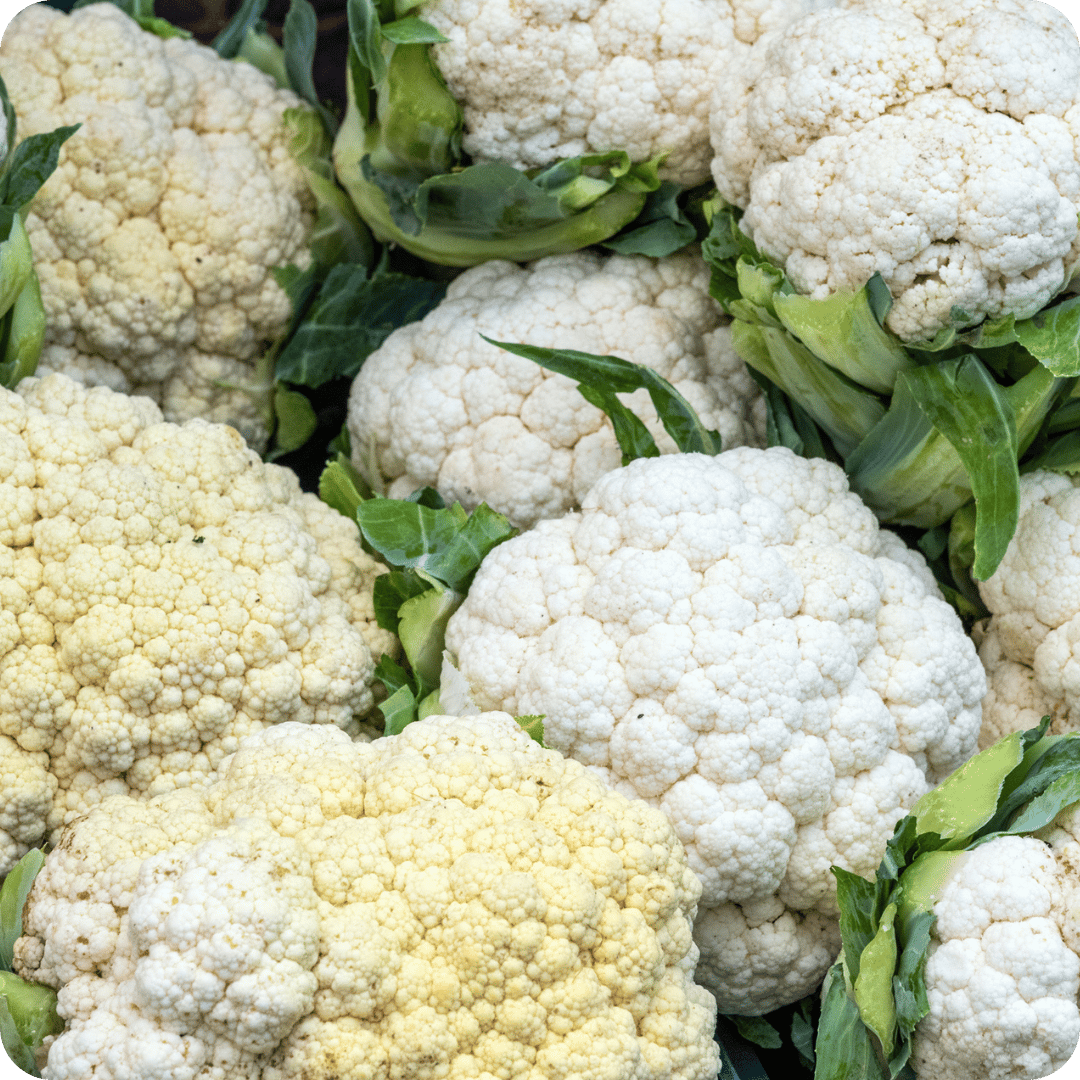
How Much Cauliflower Can Dogs Eat?
Cauliflower should be an occasional extra, not an everyday feature of your dog's diet.
As a general guide:
- Small dogs: a couple of small florets
- Medium dogs: a small handful
- Large dogs: a handful to a small cupful, chopped
Many vets suggest keeping vegetables like cauliflower to around 10% or less of a dog's total diet, with animal protein making up the majority.
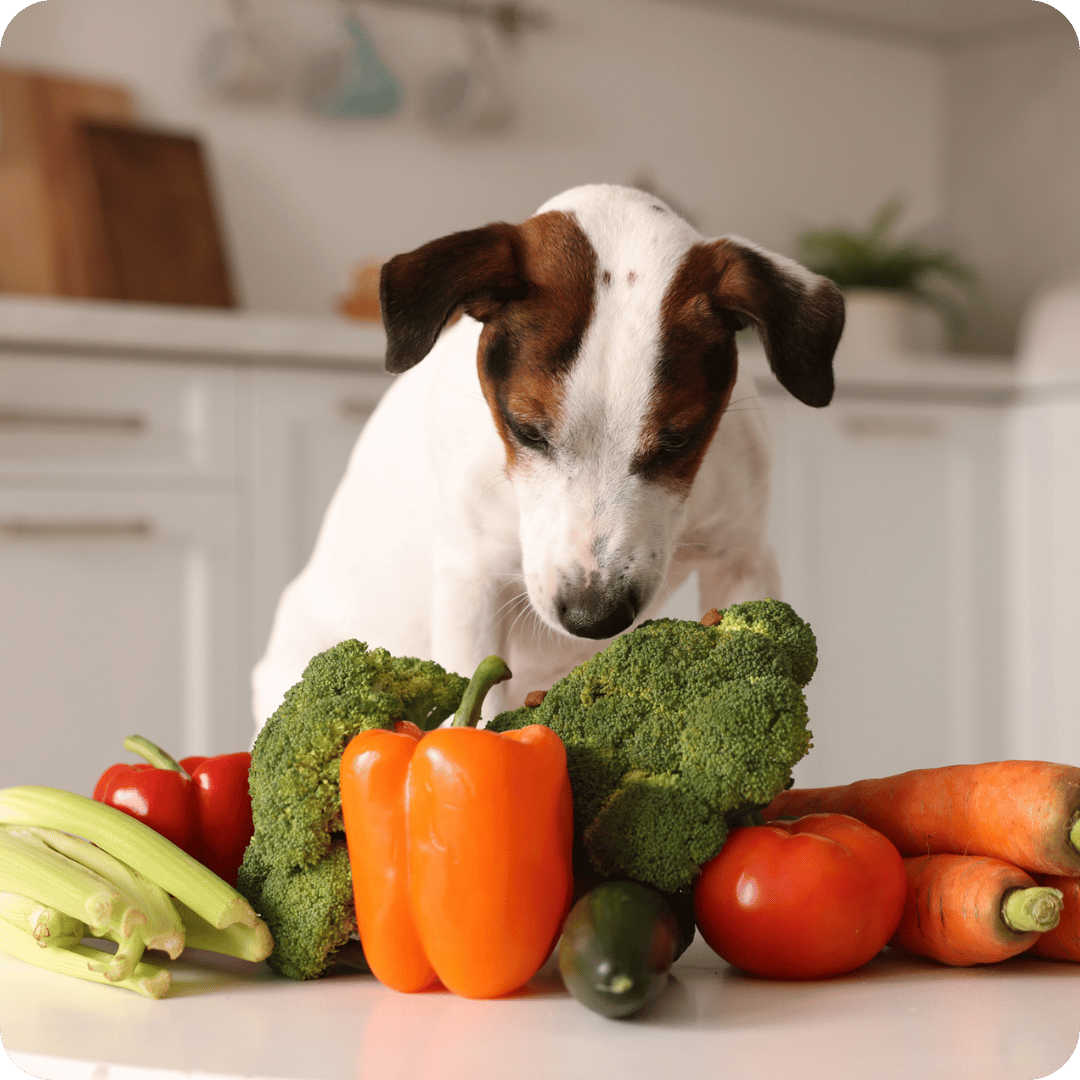
Best Vegetables to Feed Dogs Alongside Cauliflower
Cauliflower pairs well with other dog-safe vegetables as part of a varied diet.
Safe options include:
- Carrots
- Broccoli
- Peas
- Cucumber
- Courgette
Vegetables to avoid altogether include:
- Onions
- Garlic
- Leeks
- Corn on the cob
If you're ever unsure whether something is safe to feed your dog, it's always worth double-checking before offering it.
Final Verdict: Can Dogs Eat Cauliflower?
Yes, dogs can eat cauliflower in moderation.
Raw florets, cooked cauliflower, the leaves and stalk, plain cauliflower rice, and frozen cauliflower are all safe when prepared simply and served without seasoning. The main things to watch for are portion size, gas or digestive upset from overdoing it, and any hidden ingredients in cooked dishes.
Cauliflower can make a useful, low-calorie extra, but it shouldn't take the place of balanced, species-appropriate nutrition. Dogs do best when their diet is built around high-quality animal protein, with vegetables like cauliflower playing a small, occasional role.
Looking for a balanced, meat-first diet built around what dogs are naturally designed to eat? Explore our health benefits page or browse our raw dog food range.
FAQ
Yes, in small, well-chopped amounts. Puppies have more sensitive digestion, so introduce it slowly and keep portions modest.
It's best given occasionally rather than daily, to avoid gas, bloating, or an unbalanced diet.
Both are safe for most dogs. Cooked cauliflower is generally easier to digest, while raw keeps slightly more of its nutrients.
It can, particularly if fed in large amounts. As a cruciferous vegetable, cauliflower is known for producing gas, so smaller portions are usually better tolerated.
No, it's best avoided. Cauliflower cheese typically contains butter, cheese sauce, and salt, none of which are good for dogs, even though the cauliflower itself is safe.
Yes, the leaves are safe in small amounts, chopped up and served plain, just like the rest of the vegetable.