
 Puppy
Puppy
 Dog
Dog
 Senior
 Beef
Beef
 Chicken
 Duck
Duck
 Fish
Fish
 Lamb
Lamb
 Tripe
Tripe
 Turkey

 Kitten
 Cat
Cat

What Do You Do If Your Dog Has a Tick? A Guide to Ticks in Dogs
Finding a tick on your dog can be worrying, especially if you’re not sure what to do next. Ticks in dogs are very common, particularly if your dog enjoys walks in grassy areas, parks, or woodland. Most of the time, a tick is more of an inconvenience than an emergency.
The key is knowing how to spot a tick, remove it safely, and recognise when something isn’t normal. This guide explains everything step by step, so you can handle ticks calmly and confidently without unnecessary panic.
Why Ticks in Dogs Are a Common Concern
Ticks are small parasites that feed on blood. Dogs often pick them up outdoors, and even a short walk can be enough for a tick to latch on. Ticks don’t jump or fly; they crawl onto your dog from grass, plants, or bushes.
Most ticks won’t cause serious problems, but they can irritate the skin and, in some cases, spread illness. Removing ticks early greatly reduces these risks.
What Are Ticks and Why Can They Be Dangerous to Dogs?
Ticks attach firmly to the skin and feed slowly over several days. The longer a tick stays attached, the more likely it is to cause irritation or infection.
Not every tick carries disease, and many dogs show no symptoms at all. Still, prompt removal is always the safest option.
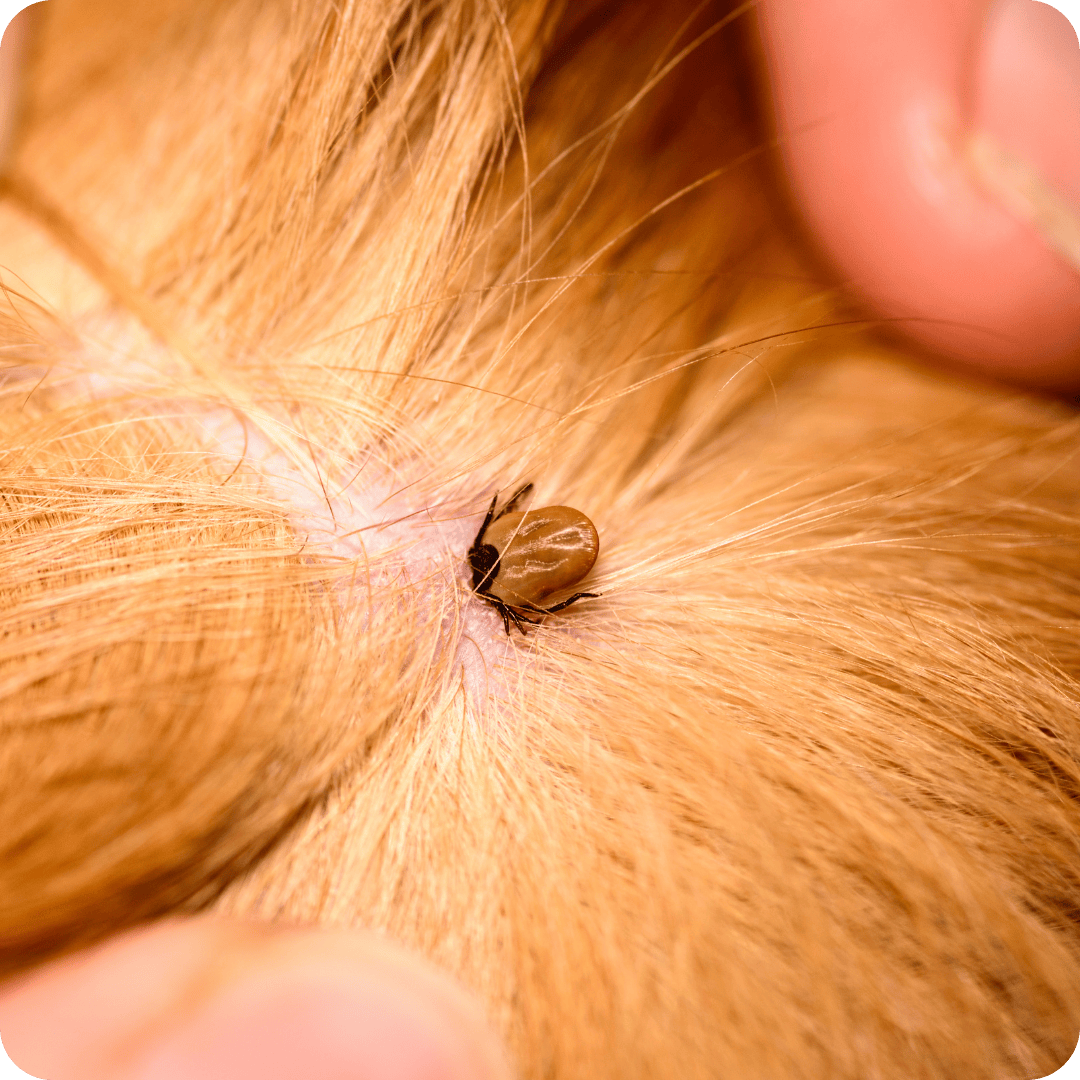
What Does a Tick Look Like in a Dog?
Ticks change in appearance as they feed. Before attaching, they are small, flat, and dark, often about the size of a sesame seed. After feeding, they swell, become rounder, and take on a lighter colour.
Ticks are most often found:
- Around the ears
- Under collars
- On the neck and head
- Between toes
- In the armpits or groin
They are sometimes mistaken for scabs or skin tags, so it’s worth checking closely.
How Ticks Attach and Feed
Ticks insert their mouthparts into the skin and remain attached while feeding. This process is painless at first, which is why ticks often go unnoticed. Daily checks make it much easier to find them early.
Signs of Ticks in Dogs You Shouldn’t Ignore
You may not always see the tick right away. Sometimes the first signs are changes in your dog’s behaviour.
Physical Signs of a Tick Bite
- A visible tick on the skin
- A small lump where a tick was attached
- Redness or mild swelling
Behavioural Signs
- Increased scratching or licking
- Sensitivity when touched in one area
- Mild discomfort or restlessness
Most dogs remain well, but any ongoing changes should be monitored.
What to Do If You Find a Tick on Your Dog
If you find a tick, stay calm. Removing ticks from dogs is simple when done correctly.
How to Remove a Tick Safely
You will need:
- Fine-tipped tweezers or a tick removal tool
- Gloves or tissue
- Good lighting
Steps
- Gently part the fur to clearly see the tick.
- Grip the tick as close to the skin as possible.
- If using tweezers, pull straight out with slow, steady pressure.
- If using a specialist tick removal tool, follow the manufacturer’s instructions, which may involve gentle rotation while lifting.
- Dispose of the tick safely.
Do not squeeze, crush, burn, or apply oils, alcohol, or heat. These methods can irritate the skin and increase the chance of a reaction.
Cleaning the Area After Removal
After removing the tick:
- Clean the area with warm water and a pet-safe antiseptic
- Wash your hands
- Check the site daily for a few days
A small bump is normal and should fade on its own.
What to Do If the Tick Head Stays in Your Dog
Sometimes the tick’s body comes away, but the mouthparts remain in the skin.
Is This Dangerous?
In most cases, no. The remaining part cannot continue feeding or spreading disease. Your dog’s skin often pushes it out naturally over time.
You may see:
- A small dark spot
- Mild redness
When to Contact Your Vet
Speak to your vet if:
- Redness or swelling increases
- The area leaks fluid or pus
- Your dog seems unwell
Avoid digging at the skin, as this can cause infection.
Tick Reactions in Dogs
Some reaction at the bite site is normal.
Normal Reactions
- Mild redness
- Slight swelling
- A firm bump for a few days
Reactions That Need Attention
- Fever
- Loss of appetite
- Ongoing lethargy
- Limping or stiffness
These symptoms can appear days or weeks after a bite and should be checked by a vet.
Can Ticks Lay Eggs in Dogs?
This is a common concern, but the answer is no.
Where Ticks Lay Eggs
Ticks do not lay eggs on dogs. Eggs are laid in the environment, such as soil, grass, or leaf litter.
Managing Your Home Environment
While ticks won’t lay eggs on your dog, they can drop off indoors. Washing bedding, vacuuming regularly, and checking resting areas can help reduce exposure.
Preventing Ticks in Dogs Naturally
Prevention works best when it’s consistent.
Daily Checks and Grooming
Run your hands over your dog’s body daily, especially after walks. Brushing helps you spot ticks early before they attach firmly.
Supporting Skin and Immune Health
Healthy skin acts as a barrier, and a well-supported immune system helps manage inflammation. Many dog owners who focus on fresh or raw feeding aim to support overall health rather than relying on quick fixes. While diet won’t stop ticks entirely, it can influence how well your dog handles minor challenges.
When to Speak to Your Vet
Contact your vet if:
- You’re unsure about removing a tick
- Your dog shows unusual symptoms
- You live in a high-risk tick area
Your vet can help you choose a prevention plan suited to your dog’s lifestyle.
Conclusion
Ticks in dogs are common, but they don’t need to be frightening. With regular checks, proper removal, and basic monitoring, most tick bites resolve without issue.
Knowing what to look for and what’s normal helps you stay calm and keep your dog comfortable, healthy, and happy.
FAQ
To safely remove ticks in dogs, use either fine-tipped tweezers or a specialist tick removal tool. With tweezers, grip the tick as close to the skin as possible and pull straight out with slow, steady pressure. Some tick-removal tools are designed to gently rotate the tick as it is lifted. Always follow the tool’s instructions. Avoid squeezing the tick or using oils, alcohol, or heat.
If the tick head stays in your dog, do not dig it out. The remaining mouthparts often work their way out naturally. Monitor the area for redness, swelling, or discharge, and contact your vet if signs of infection appear or your dog seems unwell.
Ticks cannot lay eggs in dogs. They lay eggs in the environment, such as soil, grass, or cracks in outdoor areas. While ticks may drop off indoors, eggs are not laid on your dog’s body.