
 Puppy
Puppy
 Dog
Dog
 Senior
 Beef
Beef
 Chicken
 Duck
Duck
 Fish
Fish
 Lamb
Lamb
 Tripe
Tripe
 Turkey
 Kitten
 Cat
Cat

Why Does My Dog Eat Grass?
If you've ever watched your dog hoover up a mouthful of grass on a spring walk and wondered what on earth they're doing, you're in good company. It's one of the most common questions dog owners ask — and the honest answer is that there are several possible reasons, and most of them are completely normal.
This guide covers why dogs eat grass, what it might tell you about their diet, and when (if ever) it's worth paying closer attention.
Is it normal for dogs to eat grass?
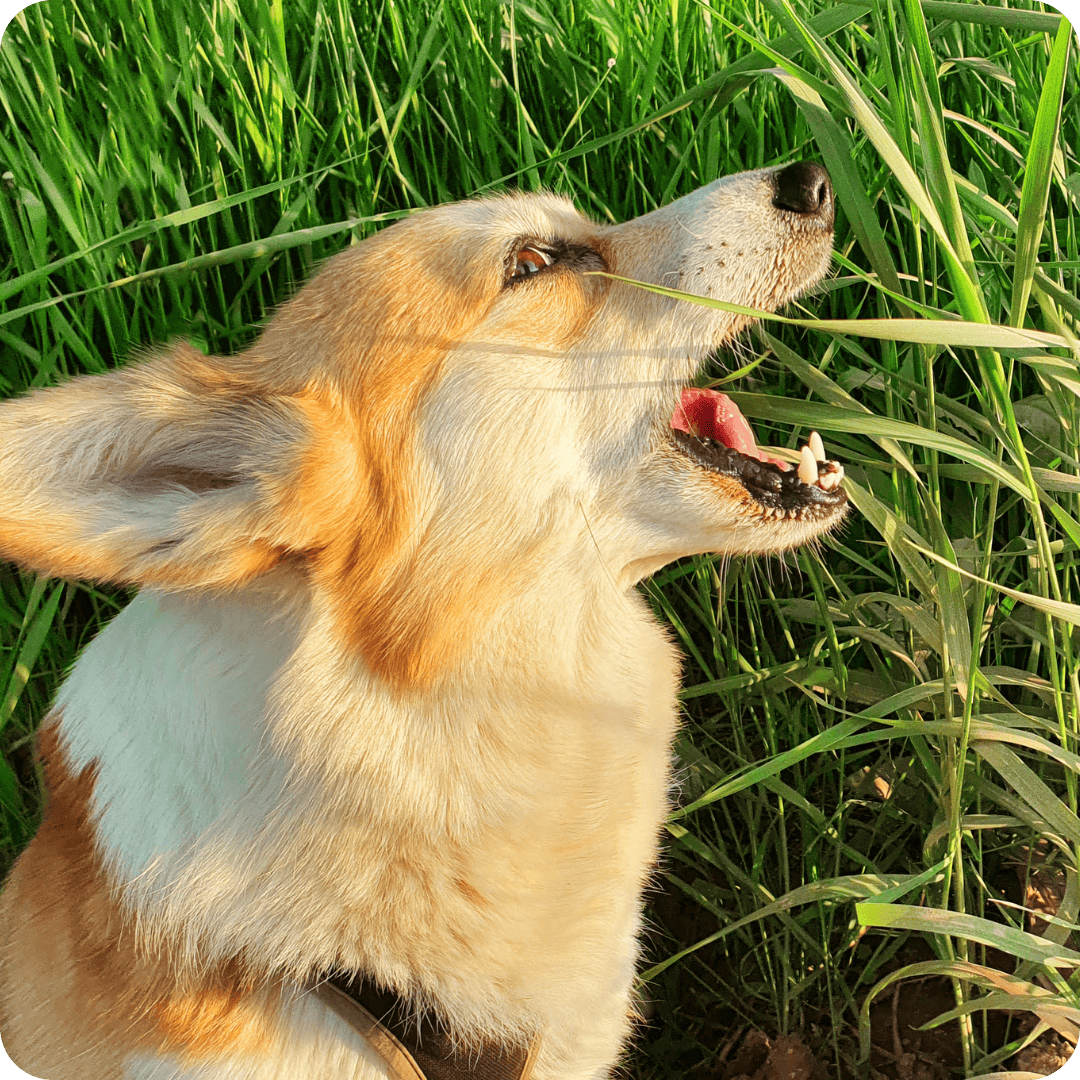
Yes, very. Studies suggest that the majority of dogs graze on grass at some point, and most do it regularly throughout their lives. It's a natural behaviour with roots in dogs' ancestry, and in most cases, there's nothing to worry about.
Spring tends to bring a noticeable spike in grass eating — fresh growth is more abundant, more appealing, and your dog is probably spending more time outside.
Why do dogs eat grass?
There isn't one single explanation. Here are the most likely reasons:
1. They're instinctively drawn to it
Dogs' wild ancestors ate whole prey, including the partially digested plant matter in the stomach contents of their prey. Eating grass, herbs, and plant material is thought to be a deeply ingrained behaviour that hasn't been bred out — even in dogs fed a perfectly balanced modern diet.
2. They like the taste
Especially in spring, fresh grass is sweet and flavourful. Many dogs simply enjoy the texture and taste of new growth, in the same way they might nibble on certain herbs or vegetables.
3. They're seeking fibre or digestive support
Grass contains insoluble fibre, which can help move things along in the gut. If your dog's diet is lower in fibre, they may graze instinctively to compensate. Dogs on raw diets rich in quality meat tend to have naturally more efficient digestion, but occasional grass eating is still common.
4. They feel nauseous and want to vomit
This is the explanation most owners reach for first — and while it does happen, it's not the most common reason. Research suggests that less than 25% of dogs that eat grass actually vomit afterwards, and most don't appear unwell before grazing. The link between grass and deliberate self-induced vomiting is probably overstated.
5. They're bored or seeking stimulation
Dogs that aren't getting enough mental or physical engagement sometimes graze as a form of self-entertainment. If it happens alongside other restless or attention-seeking behaviours, that's worth noting.
6. They have a nutritional gap
In some cases — particularly in dogs fed low-quality or heavily processed diets — grass eating can signal that the dog is seeking something missing from their food. This is less common in dogs on a nutritionally complete, high-quality diet. Ensuring your dog is getting enough nutrients from real vegetables and fruit is a great start. Natural Instinct’s raw dog food contains apples, butternut squash, and carrots, while raw feeders who primarily feed meat often opt to add Fruit and Vegetable Flakes by AniForte.

Could the grass eating be compulsive?
For most dogs, grazing is occasional and casual. But some dogs eat grass, and in some cases soil or even faeces — persistently and compulsively, which can point to a deeper digestive imbalance or nutritional deficiency.
If your dog falls into this category, AniForte's Grass & Stool-Eating Snack is specifically formulated to address exactly this. It combines digestive herbs and natural ingredients to help tackle the underlying drivers of compulsive grass and stool eating, supporting gut balance from the inside out.
Should I be worried if my dog eats grass?
In most cases, no. Occasional grass eating is normal, harmless behaviour.
That said, there are a few situations where it's worth paying closer attention:
- Suddenly eating much more grass than usual, particularly alongside lethargy, changes in stool, or loss of appetite
- Eating grass and frequently vomiting, especially if this is a new pattern
- Grazing in areas that may have been treated with pesticides, herbicides, or fertilisers — this is the bigger risk, not the grass itself
If you notice any of the above, a conversation with your vet is always a sensible step.
Is spring grass safe for dogs?
Generally, yes — but the time of year does bring some specific things to be aware of.
Grass seeds are a significant concern from late spring into summer. Long grass seeds can attach to a dog's coat and work their way into the skin, ears, eyes, or paws. After walks in long grass, it's always worth checking your dog carefully, particularly around the ears and between the toes.
Parasites are another consideration. Grass and soil can harbour the eggs of intestinal parasites such as roundworm and hookworm, which dogs can ingest simply by grazing. Warmer, wetter spring conditions help these eggs survive longer in the environment, so it's worth ensuring your dog's worming is up to date. If your dog is a persistent grass eater, AniForte's Grass & Stool-Eating Snack may also be worth exploring — it's formulated to help address the underlying digestive drivers behind the habit.
Lawn treatments are more commonly applied in spring. If you're out in public parks or gardens that aren't yours, some areas may have been recently treated, so it's always worth being aware.
Spring plants can also pose a risk. While the grass itself is usually fine, dogs grazing in gardens or verges may accidentally ingest plants that are harmful — such as daffodils, bluebells, or wild garlic. If you're not sure what your dog has eaten, it's worth contacting your vet or the Animal Poison Line.
Could diet play a role?
Possibly. Dogs on highly processed diets that are low in real, whole ingredients may be more likely to seek out plant material instinctively. Feeding a complete, nutritionally balanced diet — with high-quality protein, natural fibre sources, and no unnecessary fillers — tends to support better overall gut health and may reduce some of the dietary drivers behind grass grazing.
Our complete raw meals are made with ethically sourced, human-grade meat alongside fresh vegetables and fruit — providing a natural source of fibre and variety that suits a dog's digestive system without the additives and grains found in many kibbles.
And if your dog needs a little extra digestive encouragement between meals, a high-quality natural treat can help support gut health as part of their daily routine. Nutriment Natural Treats offers a range of wholesome, minimally processed options made from real ingredients — worth exploring if you're looking for snacks that do more than just taste good.
If you're curious about whether raw feeding might suit your dog, our transition guide is a good place to start.
Can I stop my dog eating grass?
You can manage it, but it's rarely necessary to stop it entirely.
If the behaviour bothers you, or you're concerned about what your dog is grazing on, some practical steps include:
- Keeping your own garden grass-free of chemicals
- Redirecting with a toy or treat during walks
- Ensuring your dog is getting enough mental stimulation and exercise
- Reviewing the quality and balance of their diet if grazing is frequent and persistent
- Considering a targeted supplement if grass or stool eating is compulsive — AniForte's Grass & Stool-Eating Snack is a natural option formulated for exactly this
Trying to prevent it completely is usually more stressful for both of you than it's worth. A dog that occasionally eats a bit of grass on a spring morning is, in all likelihood, just being a dog.

Final thoughts
Grass eating is one of those dog behaviours that can look strange to us but is usually entirely natural. In most dogs, it's occasional, harmless, and probably a throwback to their wild ancestors.
Where it's worth paying more attention is when the behaviour is new, suddenly more frequent, or accompanied by other symptoms. In those cases, your vet is always the right call.
If you'd like to learn more about supporting your dog's digestive health through their diet, take a look at our health benefits page or explore our full raw food range.
FAQ
Daily grass grazing is common in many dogs and isn't automatically a cause for concern. If your dog is otherwise healthy, eating well, and behaving normally, occasional or even daily grass eating is usually just normal canine behaviour.
Some dogs do eat grass when they feel nauseous and then vomit — but this is less common than people assumes. Most dogs that eat grass don't vomit afterwards. If vomiting after grass eating is frequent or comes alongside other symptoms, speak to your vet.
Fresh spring grass is more plentiful, sweeter, and more appealing than dry or dormant growth. More time spent outdoors also means more opportunity to graze. It's entirely normal to notice a seasonal uptick in grass eating this time of year.
Possibly. Dogs on diets that lack variety, fibre, or real whole-food ingredients may instinctively seek out plant material. If your dog grazes heavily and persistently, it may be worth reviewing the quality and balance of what they're eating — and considering a supplement like AniForte's Grass & Stool-Eating Snack if the behaviour is compulsive.
Grass itself is generally safe. The main risks come from grass that has been treated with pesticides or herbicides, from grass seeds in late spring and summer, and from parasite eggs that can survive in soil and grass. Always check your dog after walks in long grass, and keep their worming up to date.